After Dark in Amoron’i Onilahy: Studying Nocturnal Lemurs and Their Habitats
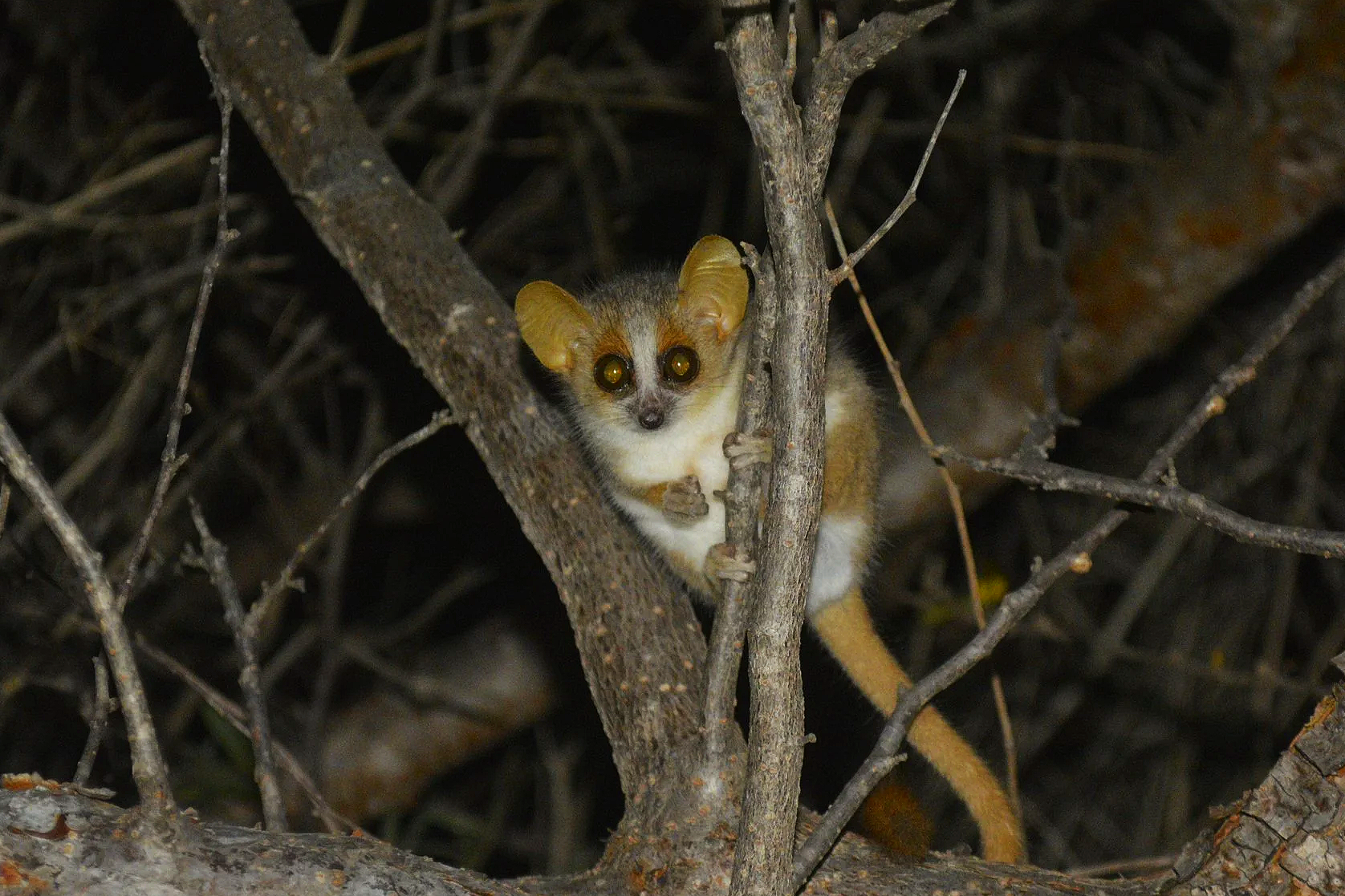
Mouse lemur (Microcebus spp.)
Where do nocturnal lemurs occur, and what can their surroundings tell us about the habitats they use? In southwest Madagascar’s Amoron’i Onilahy Protected Area, these questions guide the work of Herizoe Stanislas, a prospective PhD student at the University of Toliara and 2025 TDARFAC conservation research grant recipient.
His project, “Characterization of Habitats and Spatial Distribution of Nocturnal Lemurs in the Amoron’i Onilahy Protected Area, Southwest Madagascar,” brings together observations of lemurs and information about their habitats. The aim is to build ecological knowledge that can inform habitat protection, strengthen monitoring and guide future research.
Knowing that a species occurs within a protected area is an important starting point. Understanding where it is observed, and the conditions at those locations, provides a more detailed picture for conservation planning.
Connecting Lemur Observations with Habitat
Stanislas’s research has two connected objectives: characterizing habitats within Amoron’i Onilahy and documenting the spatial distribution of its nocturnal lemurs. By examining these together, the project can explore associations between lemur occurrence and habitat conditions across the study area.
Nocturnal fieldwork in Amoron’i Onilahy Protected Area, southwest Madagascar, where PhD student, Herizoe Stanislas, is studying the spatial distribution of nocturnal lemurs and the habitats where they occur.
This video offers a glimpse of this work after dark. Researchers search the vegetation with lights, observing lemurs among branches and on tree trunks. These encounters provide opportunities to record animals whose nighttime activity makes them difficult to study during the day.
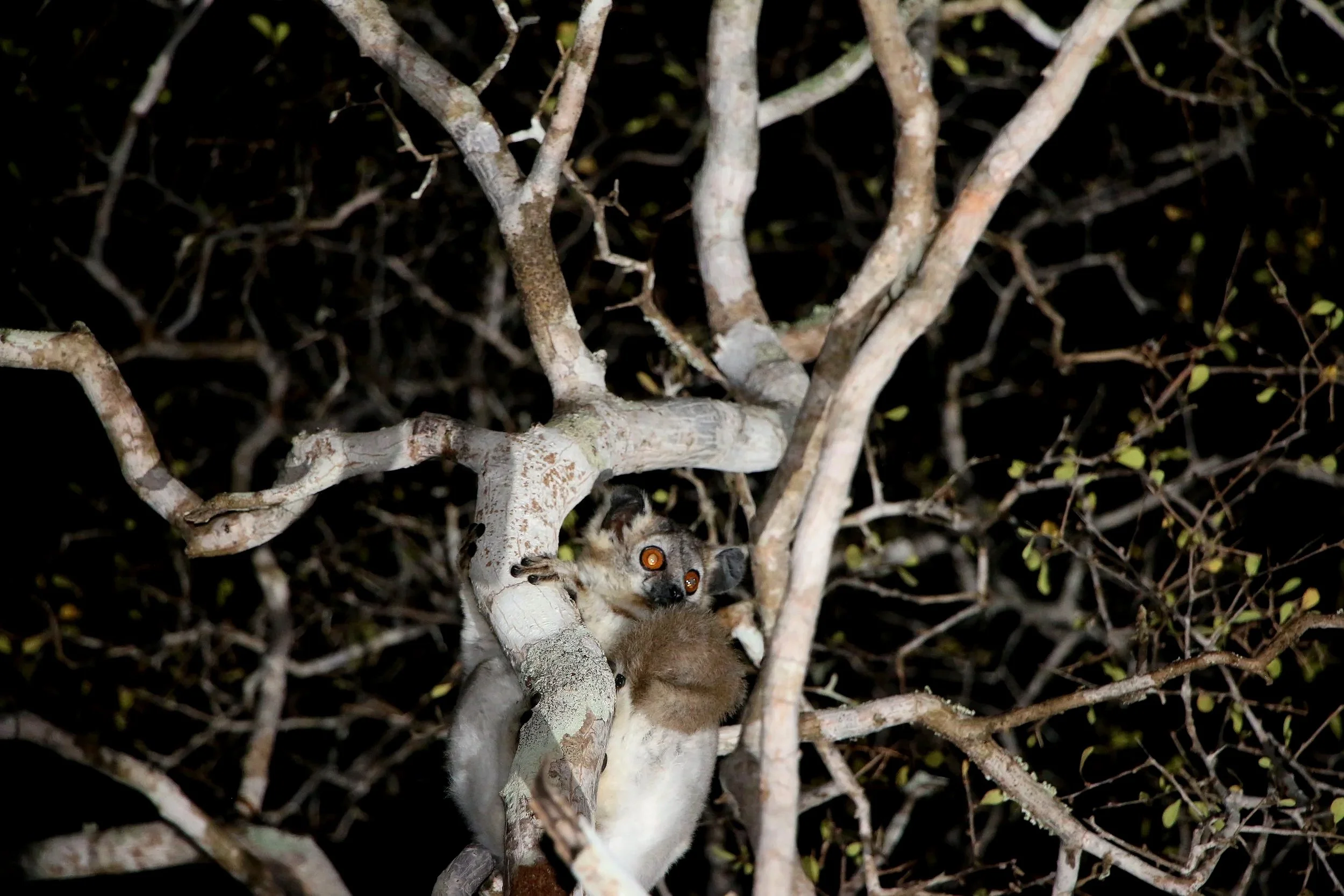
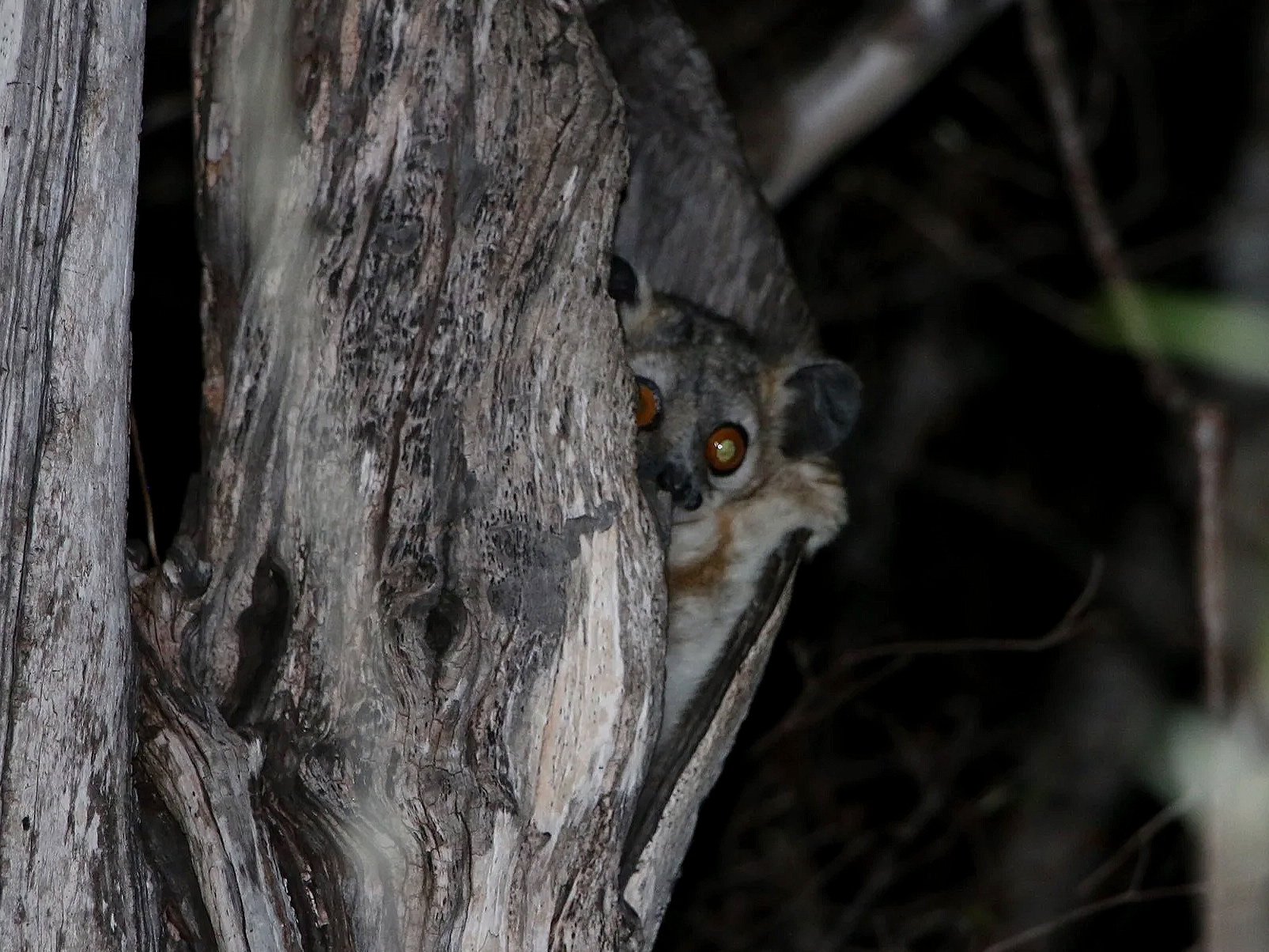
Sportive lemur (Lepilemur cf. petteri)
The notation “cf.” indicates a tentative identification based on resemblance to Lepilemur petteri.
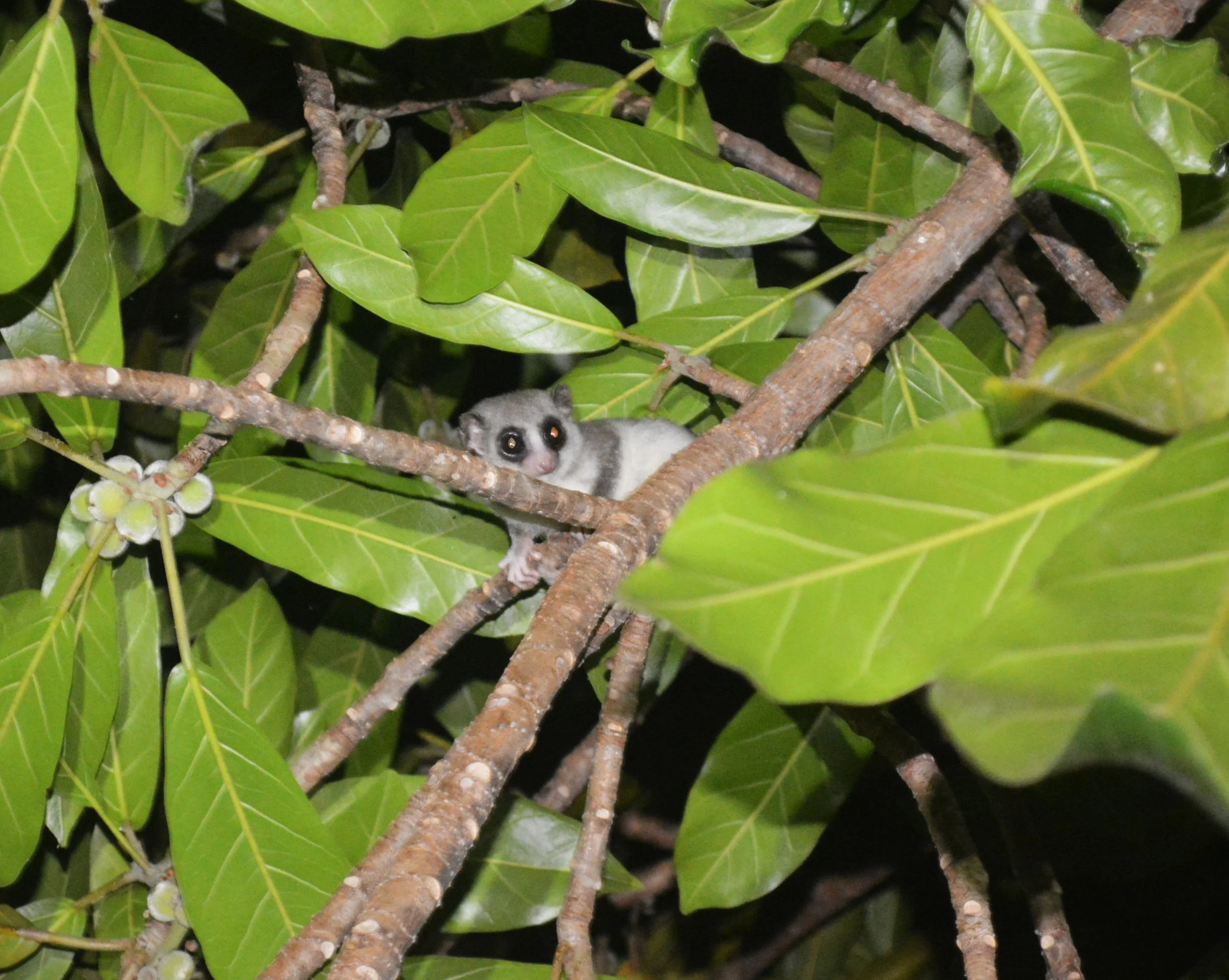
Fat-tailed dwarf lemur (Cheirogaleus medius)
Each observation contributes to the picture, but interpreting surveys also means considering what researchers might miss. An animal can be present without being detected. Vegetation, animal activity and survey conditions can all affect sightings, so a lack of observations does not necessarily mean a species is absent.
From Field Research to Conservation Planning
A clearer understanding of where nocturnal lemurs occur—and the habitats associated with those observations—can help identify priorities for further surveys and closer monitoring. It can also provide a foundation for investigating how habitat conditions influence these animals over time.
These are potential applications of the research, rather than completed conservation outcomes. The project’s contribution lies in developing the evidence needed to ask more precise questions and support better-informed management decisions within Amoron’i Onilahy.
Supporting research like Stanislas’s reflects our commitment to connecting field science with practical conservation. Careful observations, interpreted in context, help build the knowledge needed to protect lemurs and the landscapes that support them.
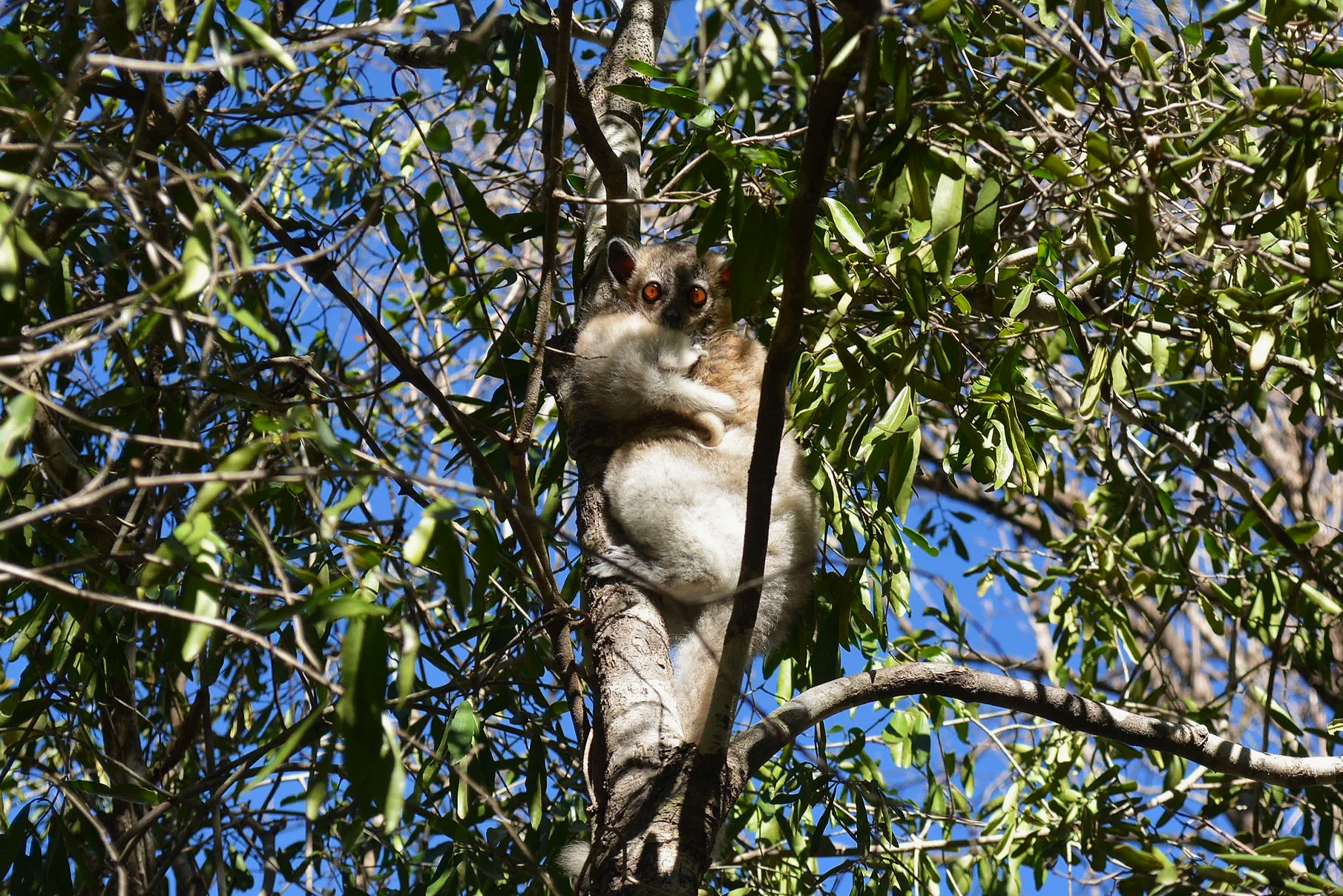
Sportive lemur (Lepilemur spp.)
Videography and photography by ELADINE Ahmed Saïd and Stanislas Herizoe.